


 Deutsch
 English
 Español
 Français
 Nederlands
 Português


 Share
Share




The World Economic Forum's Global Risks Report 2026, published in January 2026, has ranked geoeconomic confrontation as the top global risk for the first time, surpassing even armed conflict. This landmark assessment reflects an accelerating reality: the United States, China, and the European Union are deploying tariffs, export controls, and industrial policy as strategic weapons, forcing multinational corporations to adopt costly 'triple redundancy' supply chain strategies. As the global economy fragments into competing regional blocs, manufacturing costs have risen by 15–25%, and middle-power nations face mounting pressure to choose sides in an increasingly bipolar economic landscape.
WEF 2026 Report: A New Age of Competition
The WEF Global Risks Report 2026 surveyed over 1,300 leaders and experts worldwide. Geoeconomic confrontation emerged as the top short-term risk, followed by interstate conflict, extreme weather, societal polarization, and misinformation. Economic risks surged dramatically, with downturn and inflation both jumping eight positions year-on-year. Half of respondents anticipate a turbulent or stormy global outlook over the next two years, while 57% expect this over the next decade. The report warns that a new competitive order among major powers is compounding global risks and straining collective capacity to address them. Marsh CEO John Doyle described the current era as one of 'poly-crises,' involving trade wars, technological revolution, and climate impacts simultaneously.
The WEF Global Risks Report trends highlight how economic tools have become weapons of geopolitical strategy. Tariffs, sanctions, and export controls are no longer mere trade policy instruments but central components of national security frameworks. This shift marks a fundamental departure from the post-Cold War era of economic integration and liberalization.
Tariff Escalation: The US-China-EU Triangle
US-China Tariff War Intensifies
By April 2025, the United States had imposed a cumulative 54% tariff on Chinese imports, targeting electric vehicles, semiconductors, electronics, and intermediate goods. China retaliated with a 34% tariff on US goods. These measures have triggered a structural realignment of global supply chains. According to analysis from Economic Lens, EV manufacturers face triple-digit tariffs on Chinese imports, increasing production lead times by 18–25%. Apple has moved 25% of iPhone production to India, while Tesla confronts supply risks. The IMF projects global growth at just 3.3% for 2026, warning that tariff-linked inflation remains sticky, forcing central banks to maintain restrictive monetary conditions.
EU's Carbon Border Adjustment Mechanism
On January 1, 2026, the European Union's Carbon Border Adjustment Mechanism (CBAM) entered its definitive regime, requiring importers of cement, iron and steel, aluminum, fertilizers, electricity, and hydrogen to purchase CBAM certificates covering embedded emissions. This policy, part of the EU Green Deal, aims to prevent carbon leakage but also introduces a new layer of trade friction. Research published in the Review of World Economics (March 2026) finds that CBAM may exacerbate EU-China trade imbalances and potentially escalate into a trade conflict. China's possible response includes resource shuffling strategies—using green electricity exclusively for EU exports—which could improve production efficiency but also create trade-discriminatory effects. The EU CBAM trade implications are already reshaping global supply chains, with non-EU exporters facing higher costs and downstream EU industries grappling with increased input prices.
Triple Redundancy: The New Corporate Strategy
In response to the fragmentation of global trade, multinational corporations are abandoning just-in-time supply chains in favor of 'triple redundancy'—maintaining parallel production capacity in North America, Europe, and Asia. According to the Informed Clearly analysis, this strategy increases supply chain costs by 15–25%. Companies are rapidly diversifying production to Mexico, Thailand, India, and Vietnam, though new hubs face capacity constraints and higher operational costs. The WEF's Global Value Chains Outlook 2026, based on consultations with over 100 industry and government leaders, details how companies are re-architecting operations for agility and trust in an era of structural volatility.
The triple redundancy supply chain strategy is not merely a cost issue; it represents a fundamental shift in corporate risk management. Leading firms now prioritize flexibility, visibility, and selective redundancy as strategic imperatives, while AI and flexible automation become competitive requirements for navigating ongoing disruption.
Middle Powers Forced to Choose Sides
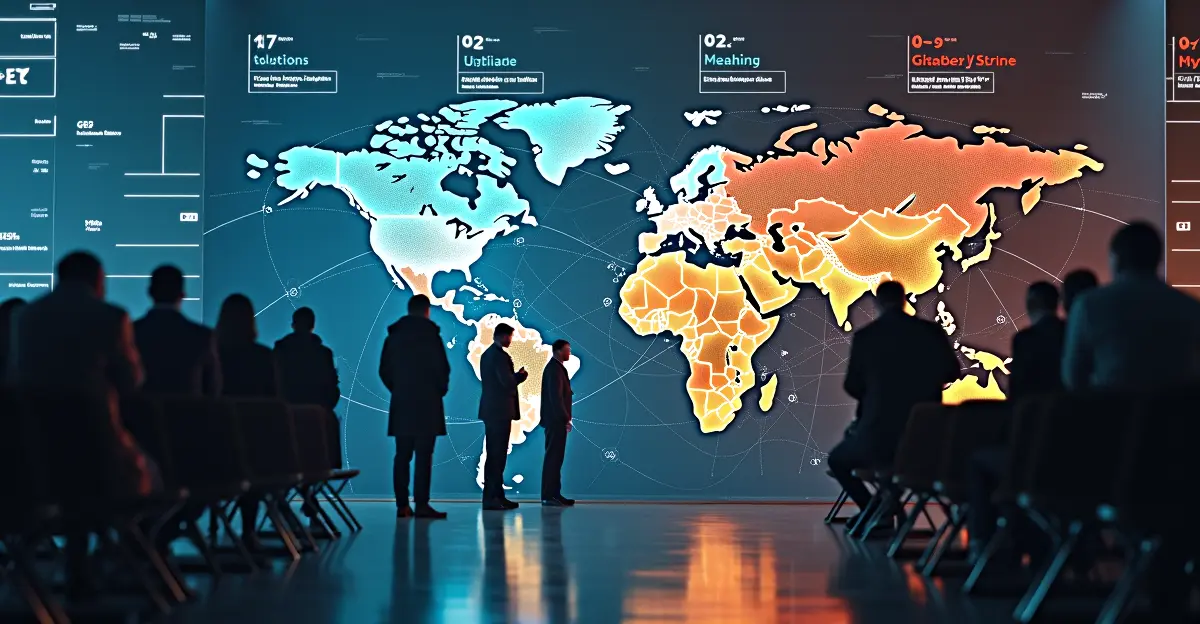
The fragmentation into competing blocs is placing immense pressure on middle-power nations. According to the Institute for Economics & Peace's January 2026 report The Great Fragmentation, the number of middle powers has nearly doubled from 9 in 1991 to 16 today. Nations like the UAE, Türkiye, and Indonesia are building influence by maintaining relationships with both Washington and Beijing while creating independent capacity for action. However, the WEF report warns that the fundamental trade-off between economic efficiency and national security imperatives is becoming unavoidable.
At the World Economic Forum 2026 in Davos, middle powers rejected binary superpower alignment, pursuing multi-alignment and building their own networks for economic resilience. Analysts note fatigue with rigid ideological choices, as countries prioritize flexibility and strategic autonomy. Yet the middle powers geopolitical alignment dilemma persists: emerging economies face pressure to align strategically with competing blocs, while the Global South demands reform of international financial institutions. New coalitions are forming around shared interests like climate action and digital governance, but for businesses, this creates a patchwork regulatory environment with higher compliance costs.
Impact on Global Trade and Manufacturing
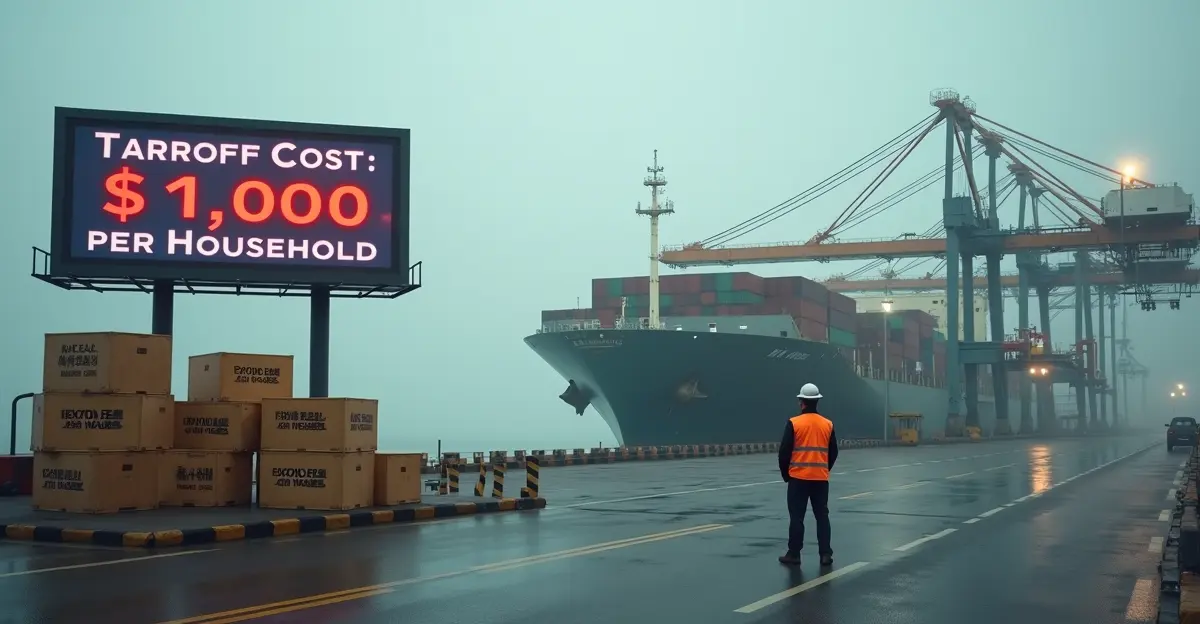
The cumulative effect of these trends is a fundamental reshaping of global trade. The US-China trade war alone has driven a 22% rise in routing delays and a steep decline in intermediate goods circulation. European manufacturers face dual exposure due to reliance on Chinese battery materials and US market access. The IMF warns that trade policy headwinds remain a key risk to global growth, with tariffs continuing to slow trade and fuel inflation risks. For US consumers, tariffs are estimated to cost approximately $1,000 per household annually.
Manufacturing costs have risen by 15–25% across sectors, driven by triple redundancy strategies, higher input costs from tariffs, and compliance with new regulatory frameworks like CBAM. The global trade fragmentation 2026 is not a temporary disruption but a structural transformation that will define the global economy for years to come.
Expert Perspectives
'We are witnessing the end of the hyper-globalization era,' said a senior economist at the WEF. 'The question is not whether fragmentation will continue, but whether we can manage it to avoid the worst outcomes—economic stagnation, inflation, and conflict.' Marsh CEO John Doyle emphasized the need for 'coalitions of the willing' to foster resilience, warning that multilateral retreat threatens cooperation on shared challenges. The WEF report urges global leaders to prioritize dialogue and multilateral cooperation to mitigate these risks and prevent further escalation of economic conflicts.
FAQ
What is geoeconomic confrontation?
Geoeconomic confrontation refers to the use of economic tools—such as tariffs, sanctions, export controls, and industrial policy—as instruments of geopolitical strategy. It involves major powers leveraging their economic strength to achieve strategic objectives, often at the expense of global trade integration.
Why did geoeconomic confrontation become the top global risk in 2026?
The WEF Global Risks Report 2026 ranked it first due to escalating US-China-EU trade tensions, the weaponization of economic tools, and the resulting fragmentation of global supply chains. Half of surveyed experts anticipate a turbulent global outlook over the next two years.
What is triple redundancy in supply chains?
Triple redundancy is a strategy where multinational corporations maintain parallel production capacity in three major regions—North America, Europe, and Asia—to mitigate risks from tariffs, export controls, and geopolitical disruptions. It increases supply chain costs by 15–25%.
How does the EU's CBAM affect global trade?
The EU's Carbon Border Adjustment Mechanism imposes carbon costs on imported goods, aiming to prevent carbon leakage. It increases costs for non-EU exporters, may escalate trade conflicts (especially with China), and reshapes supply chains toward regions with equivalent carbon pricing.
What are middle powers doing in response to geoeconomic fragmentation?
Middle powers are pursuing multi-alignment—maintaining relationships with both the US and China while building independent capacity. They are forming new coalitions around climate action and digital governance, and leveraging critical minerals and manufacturing for bargaining power.
Conclusion: A Bipolar Economic Future?
The geoeconomic confrontation of 2026 is not a temporary escalation but a structural shift toward a fragmented global order. The US, China, and the EU are building competing economic blocs, each with its own regulatory frameworks, technology standards, and supply chain networks. Middle powers face impossible choices, while corporations bear the costs of redundancy and uncertainty. The WEF report calls for 'coalitions of the willing' to foster resilience, but the path forward remains uncertain. What is clear is that the era of seamless global trade is over, replaced by a more contested, costly, and complex economic landscape.
Sources
- World Economic Forum, Global Risks Report 2026, January 2026
- Economic Lens, 'US-China Trade War 2025: Tariff Shock, Supply Chains, Inflation Risk'
- Informed Clearly, 'Geoeconomic Fragmentation, Trade Policies, Supply Chains 2026'
- Institute for Economics & Peace, 'The Great Fragmentation,' January 2026
- European Parliament Briefing, 'Economic and Monetary Repercussions of US Tariffs,' March 2025
- Review of World Economics, 'CBAM and EU-China Trade Relations,' March 2026
- CNBC, 'World Economic Forum 2026 Global Risks Report,' January 14, 2026




Follow Discussion